
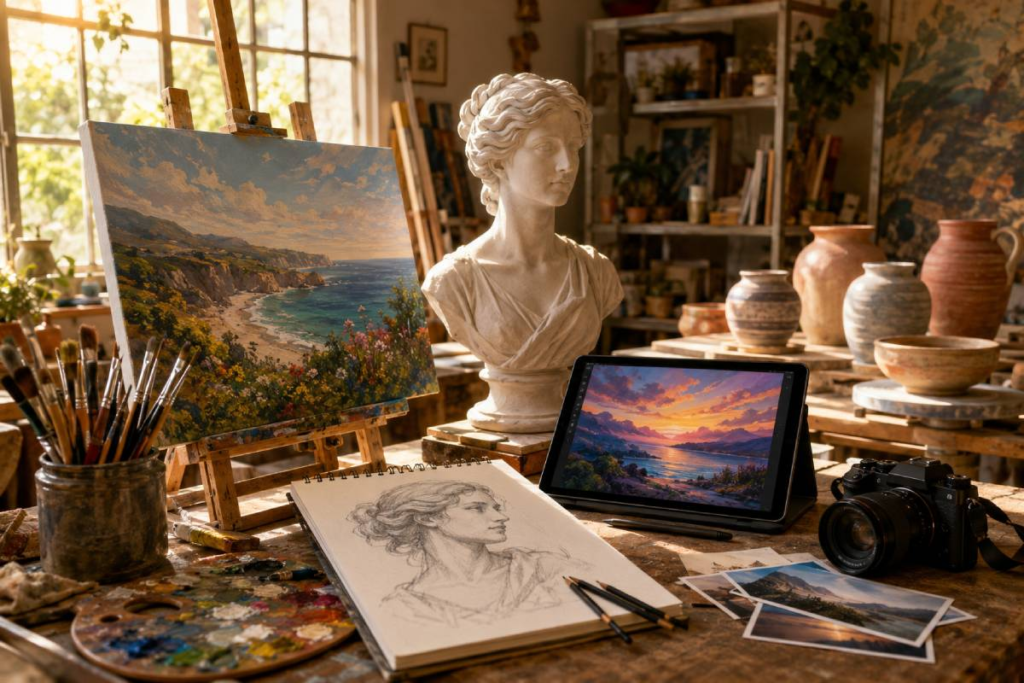
Creativity begins with curiosity.It starts when you notice the soft colors of an evening sky, Design the shape of a leaf moving in the wind, the patterns on an old building, or an interesting idea that suddenly appears while you are drinking your morning coffee.
Art and design are everywhere.
They are in the clothes we wear, the apps we use, the books we read, the rooms we live in, and even the simple signs we see while walking down the street.
For beginners, the world of art and design can sometimes feel overwhelming. There are so many styles, techniques, tools, rules, and opinions.
But here is something important to remember:
You do not have to understand everything before you begin.
This guide will help you explore the basics of art and design, understand creativity, develop your skills, and most importantly, enjoy the process of making something that feels like your own.
What Is Art and Design?
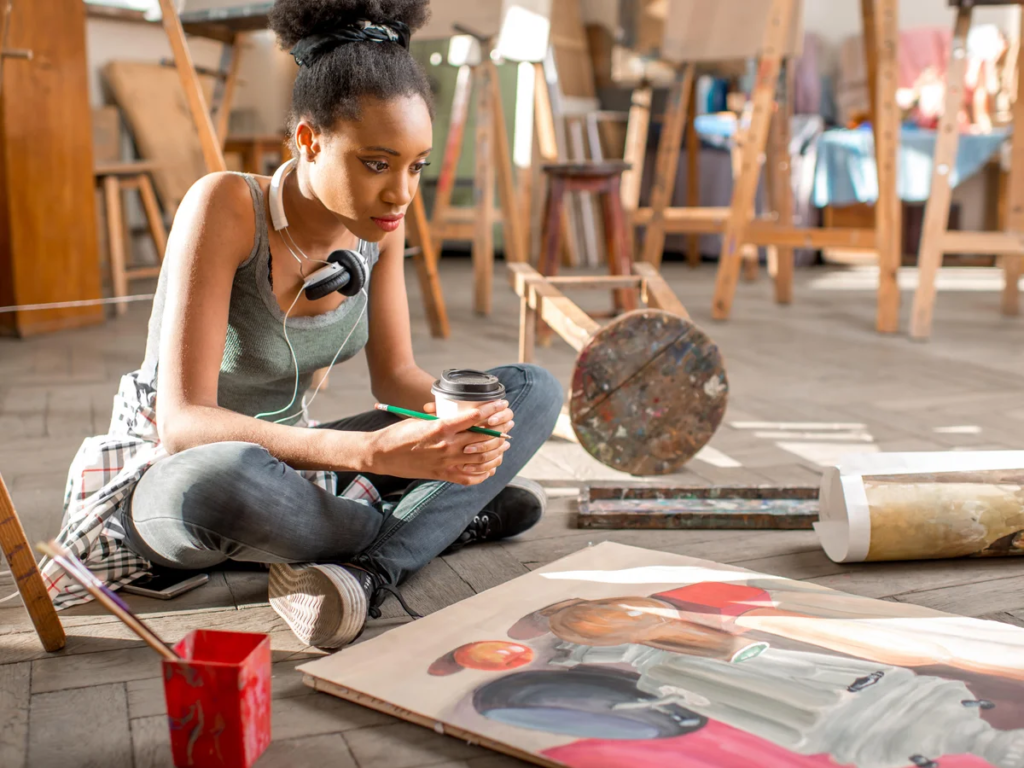
Art and design are closely connected, but they are not exactly the same.
Art is often a form of expression. It can communicate emotions, ideas, experiences, or imagination.
Design, on the other hand, usually focuses on solving a problem or communicating something clearly.
For example, a painting may express a feeling.
A poster may be designed to communicate an event.
A logo may represent a brand.
A chair may be designed to be both useful and visually appealing.
Here is a simple comparison:
| Art | Design |
|---|---|
| Often focuses on expression | Often focuses on solving a problem |
| Can communicate emotions | Communicates information or purpose |
| May be open to interpretation | Usually has a clear goal |
| Often personal and imaginative | Often created for a specific audience |
Of course, art and design often overlap.
A beautiful illustration can also be useful.
A well-designed object can also feel like a piece of art.
That is part of what makes this creative world so interesting.
Creativity Is Not About Being Perfect
One of the biggest things that stops beginners is the fear of making something bad.
You may sit in front of a blank page and think:
“What if I ruin it?”
Here is the good news.
You probably will.
At least sometimes.
Your first sketch might look strange. Your first design may feel awkward. You may create something, look at it five minutes later, and wonder what exactly you were thinking.
That is normal.
Creativity is a little like walking through a forest path in the early morning. You may not know exactly where the path leads, but each step shows you something new.
Mistakes are not the opposite of creativity. They are often part of it.
The more you create, the more you begin to understand what works, what does not, and what feels natural to you.
The Basic Elements of Art and Design
Before you worry about advanced techniques, it helps to understand a few basic elements.
These elements are like the building blocks of creative work.
| Element | Simple Explanation |
|---|---|
| Line | Creates shapes, movement, direction, or structure |
| Shape | A flat area created by lines or color |
| Color | Adds emotion, contrast, mood, and visual interest |
| Texture | Creates the feeling of surface quality |
| Space | The area around and between visual elements |
| Form | Gives an object a three-dimensional appearance |
| Value | Refers to how light or dark something appears |
You do not need to memorize these like you are preparing for an exam.
Instead, start noticing them in the world around you.
Look at a sunset.
Notice how the colors slowly change.
Look at the shadow of a tree.
Notice how light creates contrast.
Look at the design of your favorite website.
Notice how space makes the page easier to read.
Learning art and design often begins with learning how to see.
Understanding the Principles of Good Design
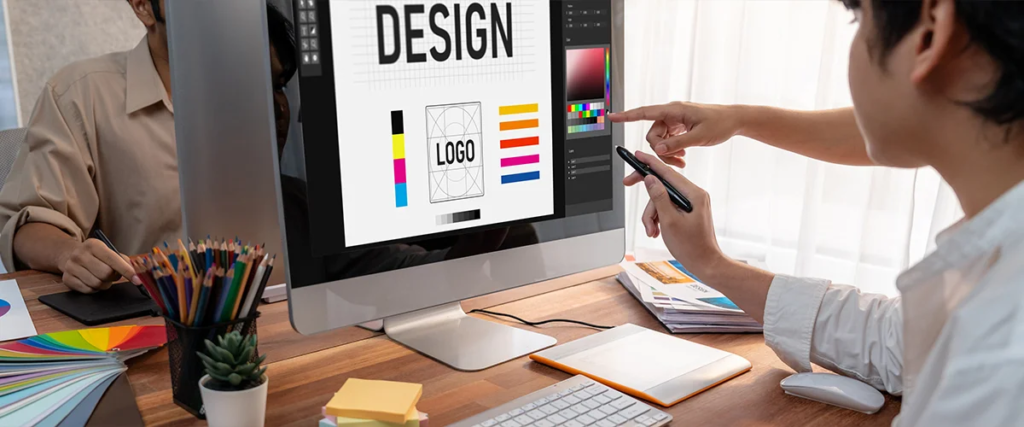
Once you understand the basic elements, you can begin exploring how they work together.
Some common design principles include:
| Design Principle | Why It Matters |
|---|---|
| Balance | Creates visual stability |
| Contrast | Helps important elements stand out |
| Alignment | Creates organization and structure |
| Repetition | Creates consistency |
| Hierarchy | Shows viewers what to notice first |
| Proportion | Helps elements feel visually balanced |
| White Space | Gives the design room to breathe |
Imagine entering a room filled with furniture, decorations, colors, and objects everywhere.
It might feel overwhelming.
A good design works in a similar way.
Sometimes, empty space is just as important as the things you add.
You do not always need more colors, more fonts, or more effects.
Sometimes removing something makes the design stronger.
How to Find Creative Inspiration
One of the most common questions beginners ask is:
“Where do ideas come from?”
The honest answer is: everywhere and nowhere at the same time.
Inspiration can arrive when you are expecting it.
Or it may appear while you are walking outside, listening to music, reading a book, or staring out of the window.
Nature can be a wonderful source of creative inspiration.
The changing colors of autumn leaves.
The quiet blue of the early morning sky.
The rough texture of tree bark.
The repeating pattern of ocean waves.
The soft shapes of clouds moving slowly across the horizon.
You do not have to copy nature.
Simply observe it.
You can also find inspiration in:
- Books
- Architecture
- Photography
- Movies
- Music
- Fashion
- Travel
- Everyday objects
- Conversations
- Personal memories
Keep a notebook or digital folder for ideas.
A small thought that seems unimportant today may become your next creative project tomorrow.
Start Creating With What You Have

A common beginner mistake is waiting for the perfect tools.
You might think:
“I will start drawing when I buy better pencils.”
Or:
“I will begin designing when I have expensive software.”
But creativity does not wait for the perfect moment.
Start with what you have.
A pencil and a notebook can be enough.
A free design tool can be enough.
Even your phone can become a creative tool.
Here is a simple beginner approach:
| Creative Area | Simple Starting Tools |
|---|---|
| Drawing | Pencil, paper, eraser |
| Painting | Basic paints and brushes |
| Digital Art | Tablet or computer |
| Graphic Design | Beginner-friendly design software |
| Photography | Smartphone camera |
| Creative Writing | Notebook or writing app |
The tools matter, but your willingness to practice matters more.
Practice Without Putting Pressure on Yourself
Not every creative project needs to become a masterpiece.
Sometimes, create simply because you enjoy the process.
Draw a cup of coffee.
Take photographs during a walk.
Experiment with colors.
Redesign a poster just for fun.
Write down unusual ideas.
Try something you have never tried before.
Think of creativity as a small garden.
You cannot force a flower to bloom by checking it every five minutes.
You prepare the soil.
You give it water.
You give it sunlight.
Then you allow it time to grow.
Your creative skills work in a similar way.
Practice is the water. Curiosity is the sunlight. Time is what allows growth to happen.
How to Develop Your Own Creative Style

When you first begin, it is natural to admire other artists and designers.
You may even copy their work as a way to practice.
That can be useful for learning techniques, but eventually, you will want to discover your own creative voice.
Your style often develops naturally over time.
It grows from:
- Your interests
- Your experiences
- Your favorite colors
- The subjects you enjoy
- Your cultural influences
- The stories you want to tell
- The way you see the world
Do not force yourself to “find your style” immediately.
Your style is often the result of creating again and again.
One day, you may look back at your work and notice patterns you did not even realize were there.
Learn From Other Artists and Designers
Learning from others can help you improve.
Study creative work and ask questions such as:
- What catches my attention first?
- Why do these colors work well together?
- How is the composition organized?
- What emotion does this work create?
- What could I learn from this approach?
The goal is not to become a copy of someone else.
It is to learn from many sources and build something that eventually feels like you.
Like a river collecting water from many small streams, your creative knowledge can come from different places.
Over time, it becomes part of your own creative journey.
Simple Ways to Improve Your Art and Design Skills
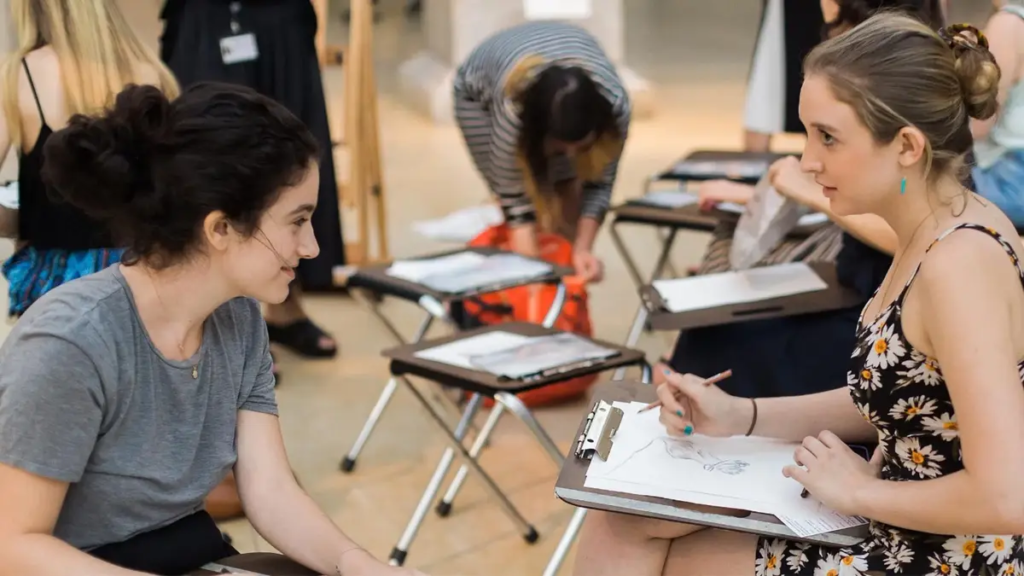
Improvement does not always require spending hours every day.
Small, regular practice can make a difference.
Try these habits:
| Habit | Simple Action |
|---|---|
| Observe | Notice colors, shapes, and details around you |
| Sketch | Create quick drawings without judging them |
| Experiment | Try new styles, colors, or tools |
| Study | Learn basic art and design principles |
| Practice | Create regularly, even for a few minutes |
| Reflect | Look back and notice your improvement |
| Take Breaks | Give your mind space to rest |
Sometimes your best ideas appear after you stop trying so hard to find them.
Go outside.
Take a walk.
Listen to the rain.
Watch the leaves move in the breeze.
Give your mind a little empty space.
Creativity needs room to breathe.
Understanding Color and Emotion
Color can change the feeling of a design or artwork.
For example, soft colors may create a calm atmosphere, while strong contrasts may create energy and excitement.
Different people may also experience colors differently based on culture, personal memories, and context.
Instead of thinking only about rules, ask:
“How does this color make the design feel?”
Here is a simple example:
| Color Family | Common Feelings It May Suggest |
|---|---|
| Warm colors | Energy, warmth, excitement |
| Cool colors | Calmness, freshness, peace |
| Neutral colors | Simplicity, balance, elegance |
| Bright colors | Playfulness and energy |
| Dark colors | Drama, depth, or seriousness |
Experiment with combinations.
There is something surprisingly enjoyable about placing two colors together and discovering that they create exactly the feeling you wanted.
The Importance of Composition

Composition is about how you arrange elements in your artwork or design.
Imagine taking ingredients from a kitchen and placing them randomly on a plate.
The ingredients may be good, but the presentation might feel messy.
Composition helps organize your creative work.
Think about:
- Where the viewer’s eyes will go first
- What the main focus should be
- How much empty space you need
- Whether the design feels balanced
- How different elements connect
A simple question can help:
“Where do I want the viewer to look first?”
Once you know the answer, you can use size, color, contrast, and placement to guide attention.
Digital Art and Design for Beginners
Digital tools have made creativity more accessible than ever.
You can draw, design, edit photographs, and create illustrations using digital devices.
For beginners, digital creativity can feel exciting because mistakes are often easier to correct.
You can experiment.
Undo.
Try again.
Move elements around.
Change colors.
Start over without throwing away an entire sheet of paper.
But remember, the software is only a tool.
A powerful program cannot automatically create a meaningful idea.
Your curiosity, observation, and imagination are still at the center.
Overcoming Creative Block

Creative block happens to almost everyone.
You may want to create something but feel completely empty.
The blank page can start feeling strangely powerful.
When this happens, do not always wait for inspiration.
Instead, lower the pressure.
Try creating something small.
Set a timer for ten minutes.
Draw without planning.
Use only two colors.
Photograph five interesting objects around you.
Create something intentionally silly.
The goal is simply to start moving again.
Sometimes motivation follows action.
Not the other way around.
FAQ’S
1. What is art and design?
Art is often used to express emotions, ideas, and creativity, while design usually focuses on communicating ideas or solving a specific problem through visual elements.
2. Can beginners learn art and design?
Yes. Anyone can learn art and design with regular practice, patience, observation, and a willingness to experiment. You do not need to be naturally talented to begin.
3. What are the basic elements of art and design?
The basic elements include line, shape, color, texture, space, form, and value. Learning these fundamentals can help beginners understand how visual work is created.
4. How can I start learning art as a beginner?
Start with simple exercises such as sketching everyday objects, practicing lines and shapes, studying colors, and observing the world around you.
5. How can I start learning design?
Begin by learning basic design principles such as balance, contrast, alignment, repetition, hierarchy, proportion, and white space. Then practice by creating simple designs.